Artificial Intelligence (AI) art is changing how we create and experience art. This FAQ will help you understand AI art, how it’s made, who owns it, how it’s used in business, and the ethical questions it raises. We’ll explore various applications of AI art, from simple tools for hobbyists to advanced systems for professionals.
What Is AI Art?
There is an important distinction between AI art, and AI-generated images. While both are enhanced by machine learning models that can mimic human artistic processes, generating AI images stops at feeding these models data, such as text prompts or existing images, to produce new visuals. This process can quickly create images without much human input.
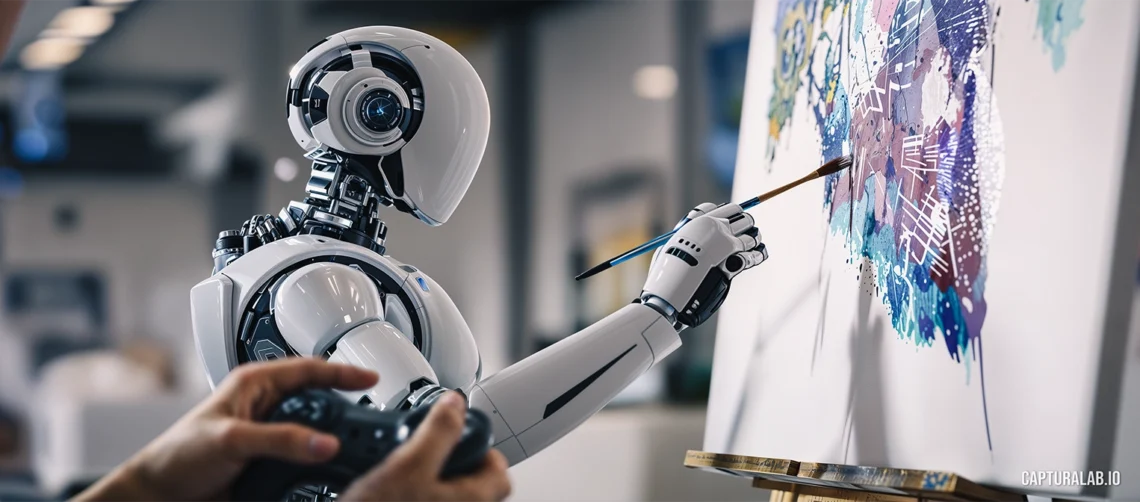
However, creating AI art goes beyond simple image generation—it requires an artist’s intentional effort to convey a message, deliberate elements like mood and tone, and ensuring the final piece aligns with their creative vision.
What Does AI Art Involve?
Making high-quality AI art involves several technical steps:
- Model Training: Teaching the AI to recognize patterns and styles by feeding it large datasets.
- Consistency: Ensuring characters, products, or styles remain uniform across different artworks.
- Advanced Features: Adding realistic facial movements or lip-syncing in animations.
- Prompt Refinement: Carefully crafting instructions to guide the AI in generating the desired output.
- Computing Power: Using powerful computers to process complex tasks efficiently.
If you’d like to learn more about creating commercial-grade AI art, check out our guide to Mastering AI Art.
Who Legally Owns AI-Generated Art?
Generally, if you as an artist contribute creatively to the AI-generated work, it is accepted as ‘your art’ and is eligible for copyright protection. However, artwork created entirely by AI without human intervention is subject to debate regarding ownership and copyright eligibility.
For example, in the United States, the U.S. Copyright Office has stated that works created solely by AI without human authorship are not eligible for copyright protection. In contrast, the United Kingdom allows copyright in AI-generated works, considering the person who made the necessary arrangements for the creation of the work as the author.
At Capturalab, human creativity plays a significant and essential role in our AI-assisted art projects, which secures their copyright protection completely.
Can AI Art Be Used Commercially?
Yes, AI-generated art is increasingly used for commercial purposes, from advertising campaigns to consumer products. The ability to produce unique, appealing visuals quickly makes AI art a valuable asset for businesses looking to stand out. For example, WPP, a UK advertising group, has invested in the AI start-up Stability AI to enhance its creative solutions for clients.
How Is AI Influencing Fine Arts?
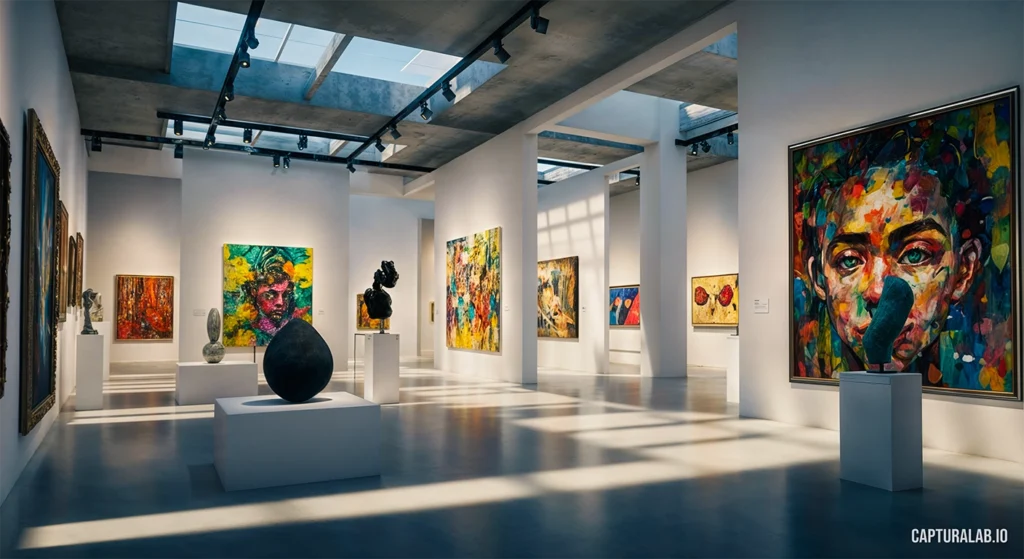
AI art is gaining acceptance in traditional art spaces, inviting and assessing creators in different ways:
- Galleries and Auctions: Prestigious venues are exhibiting and selling AI-generated artworks, highlighting their growing value in the art world, such as the Mori Art Museum’s recent “MACHINE LOVE: Video Game, AI and Contemporary Art” exhibit in Tokyo. (Mori Art Museum)
- Festivals and Competitions: Festivals such as Runway’s AI Film Festival are held entirely for AI-generated works. Art contests such as the London School of Economics’ AI Art Challenge requires that every submission contains an element of user and AI collaboration. (LSE)
How Are Brands Using AI Art?
Major brands are incorporating AI art into their marketing strategies:
- Coca-Cola: The company used AI to recreate its classic holiday advertisements, aiming to blend their traditions with new technologies. (Holiday Magic)
- Land Rover: The automotive brand has explored AI-generated content to showcase their vehicles in dynamic and creative ways, mixing AI and traditional video in an experimental ad. (Land Rover Defender)
How Is AI Benefiting Art Industries?
AI art isn’t just for final products; it enhances various artistic workflows beyond image & video, like automated dialogue replacement (ADR) in film, or dynamic content generation in games. AI streamlines various creative processes:
- Filmmaking: AI assists in tasks like Automated Dialogue Replacement (ADR), reducing the need for costly reshoots. For instance, the 2025 Oscar-winning film “The Brutalist” utilized AI-assisted ADR for this exact purpose.
- CGI and Architecture: Our partners at BOLDCGI, who create detailed computer-generated imagery and architectural designs, employ AI art to generate moodboards and composition boards. These are essential in establishing a project’s color palettes, materials and other décor elements—using AI art as part of their workflow in this way helps to save time and resources.
Is There an Ethical Concern with AI Art?
The rise of AI art has raised ethical questions, such as the authenticity of the art and the replacement of human artists. This is no different than what has been said about AI in other fields such as writing and scientific development, which are all undergoing the same groundbreaking innovations.
Responsible usage of AI across all fields relies on models being trained on non-copyrighted materials and data, something which must be assured by popular model providers as well as anyone training their own models.
Regarding the replacement of human artists, as we’ve said before, AI is no more than a tool to enhance and empower the artist’s existing vision and creative process. While AI enables more people to generate basic visuals, transforming these into true art requires human contribution in the form of a clear artistic goal.
Let’s Embrace AI Art!
AI art is transforming the creative landscape, offering new ways to convey messages and create experiences. As this technology continues to evolve, it will undoubtedly open up new possibilities and challenges in the art world and beyond. At Capturalab, we view AI art as the product of an artist’s work and vision enhanced by these advanced tools. By embracing AI responsibly, we can ensure that technology and human creativity work together harmoniously.
Explore our Portfolio page to see some of our work, or visit our Contact Us page for any projects inquiries or support.